Conduire la circulation piétonne hors saison : un guide de terrain pour le marketing durable des destinations


Par Andrew Applebaum, expert en tourisme numérique
To encourage off-season visitors to explore open businesses and quieter regional stops beyond the peak season, destination marketing organizations (DMOs) should launch a highly focused, incentive-driven campaign that routes visitors toward verified open businesses using durable, low-maintenance rewards distributed from a single, centralized location.
Many regional tourism teams face a frustrating seasonal imbalance. Summer brings overcrowding, packed parking lots, and strained infrastructure, while the quieter shoulder and winter months leave local merchants struggling for consistent foot traffic.
The natural impulse is to design an expansive off-season trail to spread the love across the entire region. However, managing complex seasonal logistics with a lean team can quickly derail a campaign. A successful shoulder-season or winter campaign requires setting explicit boundaries around merchant selection, auditing real-world friction points, and choosing low-maintenance reward structures that do not create an administrative burden for your staff.
1. Filter for Real Route Readiness: The Open-Door Audit
One issue I see often is that off-season campaigns promote businesses without first checking whether those businesses are actually open and ready to receive visitors. While a scenic rural stop or an artisan boutique might be a peak-summer favorite, its off-season reality often includes reduced operating hours, unexpected temporary closures, or minimal winter staffing.
Sending an enthusiastic visitor to a padlocked door or an unplowed parking lot damages the credibility of your entire regional tourism brand. Before adding any stop to an off-season itinerary, your tourism team must evaluate merchants using a strict operational filter.
Off-Season Merchant Selection Table
Best-Fit Off-Season Stops | Not-Best-Fit Off-Season Stops | Operational Alternative (Keep Board Happy) |
Consistent, Verified Winter Hours: Businesses operating on regular, predictable schedules throughout the slower months. | Seasonal or "Weather Permitting" Hours: Merchants who close early during slow days or rely on drop-in traffic. | Feature them in a separate "Call Ahead" digital directory listing rather than a fixed itinerary route. |
Dedicated Onsite Staffing: Operations with enough staff capacity to handle visitor questions and prompt check-ins. | Solopreneurs or Volunteer-Run Sites: Locations where a single staff member handles production, service, and admin tasks. | Place their check-in QR code outside the building as an architectural or window-shopping historic point. |
Maintained, Accessible Infrastructure: Ploughed parking lots, clear winter signage, and lit entryways. | Unmaintained Rural Locations: Stops requiring travel down unplowed roads or walking on unlit, icy pathways. | Pause the stop entirely until shoulder-season maintenance resumes, protecting visitor safety. |
Indoor Comfort or Heating: Locations that provide shelter, public restrooms, and warm spaces for visitors. | Strictly Outdoor Viewing Points: Points of interest with zero shelter or staff presence during cold weather. | Pair the outdoor point explicitly with a neighboring indoor cafe stop within the same itinerary block. |
The Route-Readiness Checklist
Before publishing a shoulder-season or winter route, a designated team member should physically test or verify the following criteria for every single stop:
Hours Verification: Have you confirmed the merchant's active off-season hours within the last 14 days?
Staff Capacity: Has the business owner confirmed that front-line staff have been briefed on the campaign?
Winter Parking: Is the parking lot regularly plowed and salted by the municipality or the owner?
Onsite Signage: Is the business clearly visible from the road when winter conditions or early darkness set in?
Weather Backup: Does the stop remain viable and safe during heavy rain, sleet, or snow?
2. Eliminate Street-Level Visitor Friction
When I review an off-season route, I look for the smallest visitor friction points first: hours, parking, weather, signage, and reward pickup. In peak season, a visitor might tolerate a confusing detour or a minor delay because the weather is pleasant and options are plentiful. In the winter or shoulder season, minor inconveniences cause immediate campaign drop-off.
To turn a quiet-season idea into something visitors can actually complete, your team needs to map out the exact physical steps a visitor takes on the ground.
The Sidewalk Test: Walk the route yourself during off-peak hours. Can you find the entrance easily in low light? Is there clear window signage or a visible counter card letting the visitor know they are in the right place?
Front-Line Staff Prompts: Merchants experience high staff turnover, especially between seasons. Give participating businesses a single, laminated counter card with a one-sentence staff prompt (e.g., "Welcome! Scan the QR code here on our counter to check in and collect your seasonal digital passport points.").
Clear Start-Point Clarity: If a route covers a larger geographic footprint or a quiet main street, explicitly highlight where the journey begins, where visitors should park, and which stops offer public washrooms.
3. Keep Reward Logistics Lean and Centralized
Lean destination teams cannot manage complex, fast-changing reward logistics manually during slower periods. Durable, low-maintenance rewards distributed from one central location are usually easier to manage.
If your campaign requires small-business owners to manage physical prize inventories, track complex point redemptions, or alter their point-of-sale workflows during a slow afternoon, merchant participation will plummet.
The Low-Admin Launch Sequence
To run a gamified campaign without overwhelming a lean team, execute your rewards program using this three-part centralized framework:
Automate Tracking Digits: Use a digital platform to handle tracking, points accumulation, and digital check-in incentives automatically on visitors' phones.
Funnel to One Physical Hub: Direct visitors to redeem their final reward at a single, well-staffed location—such as a regional visitor center, a municipal office, or a single prominent BIA partner that stays open seven days a week.
Stock Durable Physical Prizes: Focus entirely on non-perishable, region-branded items (like hats, winter beanies, or local stickers) that do not require climate-controlled storage or frequent inventory updates by your staff.
Proven Campaign Frameworks
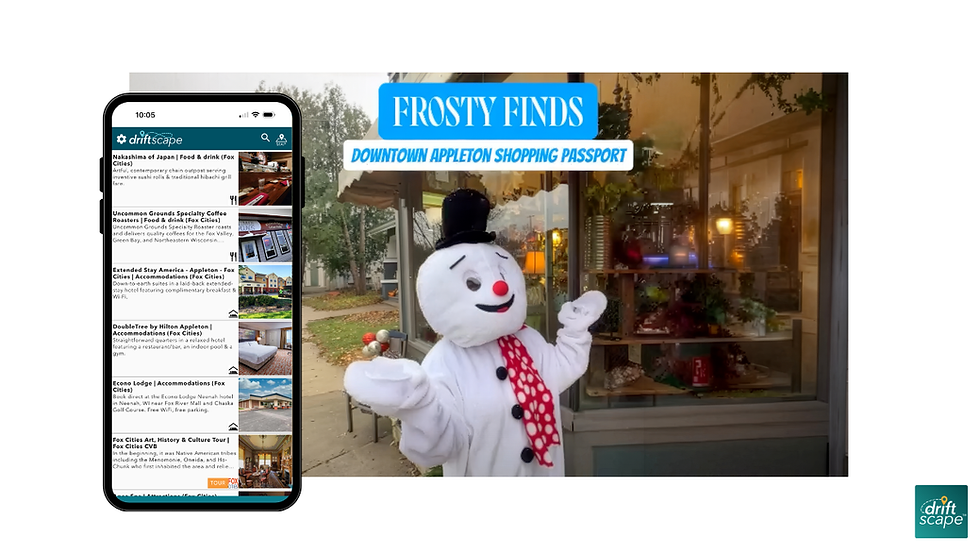
A winter passport framework can successfully incentivize local exploration when built around simple rewards. For example, the Fox Cities CVB launched their Frosty Finds Winter Passport in February to drive engagement during a typically quiet winter month. The campaign featured 29 participating businesses and utilized digital check-ins, local specials, and a small pool of high-value prizes, including 10 Downtown Appleton gift certificates worth $50 each.
The campaign captured clear attention and participation, recording 18,487 passport views, 819 unique users, 78 redemptions, and a 10% coupon-redemption rate among users. DMOs should note that while these metrics prove strong audience attention, unique user size, and active offer use during a winter campaign, they do not measure total local spending or guarantee a specific volume of off-season foot traffic.
4. Transitioning from Print to Digital
Once your team has audited your local business hours and simplified your reward structure, a digital platform can make tracking and executing your seasonal campaign easier. Driftscape helps regional tourism teams manage local routes via an app for tourism boards, while your team still controls the vital ground-level work of verifying merchant hours and distributing rewards.
Using digital tools allows your team to leverage a points and rewards engine or launch location-based digital coupons. This approach drastically reduces the manual work of printing paper passports that quickly become outdated when a merchant changes their hours mid-winter.
However, technology has clear boundaries: digital passports can track views, clicks, and check-ins, but they cannot prove total business revenue or fix broken onsite signage. A digital tool is only as strong as the physical preparation your team completes on the street.
To gauge your progress, prioritize precise measurement language when reporting to your board or council:
Views and Clicks: Measure initial digital attention and interest in your off-season stops.
Check-ins and Scans: Show active participation, proving that a visitor physically arrived at a specific merchant counter.
Redemptions: Measure actual offer use, showing how many visitors engaged with a local promotion.
Questions fréquemment posées
Q: How do we handle a participating business that changes its hours or closes unexpectedly mid-campaign?
A: A practical lesson from working with tourism teams is to use a digital content management system rather than printed guides so you can update listings instantly. If a business closes unexpectedly, immediately pause their point-of-interest check-in on the dashboard and add a brief update notice to the route description so visitors don't drive to a closed storefront.
Q: What should we do if a local business owner drops out of the campaign or forgets to train their staff?
A: The mistake I would check first is failing to provide a physical, standalone reminder at the counter. Provide every merchant with a clear, laminated counter card featuring a scannable QR code. This ensures visitors can participate independently, even if a new or untrained front-line staff member is working the register during a quiet afternoon shift.
Q: How do we prevent fraud or "couch check-ins" where users try to claim rewards without visiting the stops?
A: Configure your digital check-in incentives to rely on precise, location-based verification. Set a strict geofence radius around the coordinates of the physical business or require a physical scan of an onsite QR code placed inside the shop. This ensures that a visitor must actually stand at the merchant counter to earn points.
Q: Our regional visitor center is closed during the winter. Where should we host our centralized reward pickup?
A: Partner with a high-traffic, centrally located municipal or business hub that maintains regular daily hours throughout the winter. Excellent options include the local public library branch, a main municipal administration desk, or a prominent downtown cafe that has agreed to act as your official campaign hub in exchange for the guaranteed foot traffic.
Ready to Review the Data?
To see how a gamified digital passport moves visitors across a local business community while capturing verifiable, street-level data for board reporting, read our in-depth case study.
À propos de l’auteur : Andrew Applebaum est un expert en tourisme numérique chez Driftscape qui aide les destinations, les BIA, les musées et les équipes touristiques à créer des expériences de visiteurs autonomes ancrées dans des histoires locales. Il écrit sur des moyens pratiques d’améliorer l’engagement des visiteurs, de soutenir les entreprises locales et de faciliter le lancement et la gestion des initiatives touristiques.
Consultez le profil d’Andrew et connectez-vous sur LinkedIn.


